
Garage Door Won't Open in Cold Weather: Causes and Safe Next Steps
It's a January morning, you press the button and nothing happens. Or the opener hums, the door lifts a few inches and drops back down. Cold-weather garage door problems are common in central Ohio, and most come down to a short list of causes. Some are simple to check yourself. One, a worn or broken spring, is a job for a trained technician.
Delaware Garage Door Pros is a free quote service, not a garage door company. We don't repair doors, send technicians or set prices. Independent local garage door companies reply to requests and set their own prices.
Door stuck right now? Don't force it, and don't keep pressing the button. Don't touch springs or cables. Pull the opener's emergency release only if the door is fully closed, and if the door feels very heavy when you try to lift it, stop: that usually points to a broken spring. Call (740) 471-1706 or request quotes and say it's urgent. Some local companies offer evening, weekend or emergency service, often at a higher rate (Fixr: +$100–$300). Mention urgency on your request and ask about after-hours fees.
Why won't my garage door open when it's cold?
1. A worn or broken spring
This is the most serious cause and one of the most common. Cold weather often reveals a worn spring: it was already near the end of its rated life, and a cold morning adds just enough strain. Signs include a loud bang overnight, a visible gap in the coil above the door, or an opener that strains, lifts the door a few inches and stops. The broken spring repair page covers what happens next.
2. The door is frozen to the floor
Snow melts off cars, runs under the door and refreezes overnight, bonding the rubber bottom seal to the slab. The opener runs but the door barely moves, or it reverses. Running the opener again and again against a frozen seal strains the opener and can tear the seal.
3. Thick grease and stiff rollers or hinges
Cold thickens old grease and stiffens rollers and hinges, so the door takes more effort to move. Many openers sense that extra resistance and stop or reverse. A door that grinds, squeals or shudders in winter often needs lubrication or worn rollers replaced. See rollers, hinges and noisy doors.
4. Opener force settings
Openers are set to stop and reverse when they meet resistance. That's a safety feature: federal rules require openers made since 1993 to reverse within 2 seconds of hitting something (16 CFR 1211). Turning up the force to push past a stiff or frozen door hides the real problem and can weaken that protection. A technician should find out why the door is hard to move.
5. Photo-eye sensors
The small sensors near the floor on each side of the door can be blocked by snow, frost or condensation, or knocked out of line by a shovel. Sensor problems usually stop the door from closing rather than opening, often with a blinking opener light. The safety sensor repair page explains the common fixes.
6. Remote and keypad batteries
Cold drains small batteries. If the wall button works but the remote or keypad doesn't, a battery is the likely culprit.
7. An aging opener
Fixr puts typical opener life at about 10–15 years. An opener near the end of that range may struggle more on cold mornings. The repair or replace your opener post helps you decide what to do with one.
Match the symptom to the likely cause
| Symptom | Likely cause | Who should handle it |
|---|---|---|
| Loud bang, then the door won't lift or feels very heavy | Broken spring | A trained technician |
| Door lifts a few inches, then stops or reverses | Worn spring, stiff hardware or a frozen seal | A technician if springs look worn |
| Opener runs, door doesn't move at the bottom | Seal frozen to the floor | Let it thaw, then have the seal checked |
| Door won't close, opener light blinks | Photo eyes blocked or out of line | Check the lenses, then a technician |
| Wall button works, remote doesn't | Remote or keypad battery | You |
| Grinding, squealing or shaking | Stiff rollers, hinges or dry hardware | A tune-up visit |
What's safe for a homeowner to check
- Try the wall button. If it works and the remote doesn't, replace the remote battery.
- Look, without touching, at the springs. A gap in a coil above the door, or a loose spring along the side tracks, means stop and call.
- Look at the photo eyes. Check their indicator lights, clear away snow and wipe the lenses gently with a soft cloth.
- Look along the bottom edge. If ice is holding the seal to the floor, let the garage warm up rather than prying at the seal with sharp tools. Don't use open flames or heat guns near the door.
- Check the power. If the power is out, the opener won't run unless it has a battery backup.
Leave the rest alone. Springs, cables, drums and opener force settings are technician territory.
Why this happens so often around Delaware County
Columbus-area weather normals (NOAA 1991–2020) show about 103 nights a year at or below freezing, an average January low of 22°F, and roughly 75 days a year when temperatures cross the freezing mark. Delaware County sits a little north of the airport station, so it may run slightly colder. Springs, cables, rollers and openers work hardest on those mornings.
The housing matters too. Delaware County's median home was built in 2000, and about two-thirds of homes were built between 1990 and 2019 (Census ACS 2020–2024). Many of those homes still have original or second-generation springs and openers that are reaching the end of their typical life. Snow and road salt carried in on cars add moisture to the garage, and DASMA, the door manufacturers' association, notes that rust and poor lubrication shorten spring life.
How to head off cold-weather problems
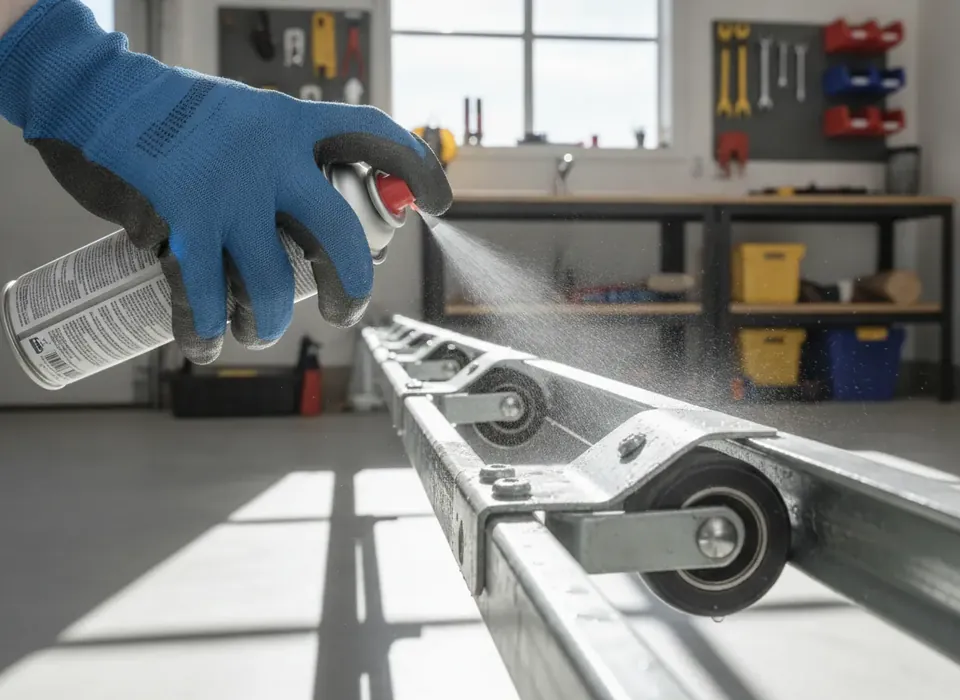
- Book a tune-up in the fall. Ask the company to check door balance, lubricate moving parts, inspect springs and cables, and test the auto-reverse and photo eyes. See the garage door tune-up page.
- Test the safety features monthly. The CPSC advises testing your opener's auto-reverse every month. The safety sensor test post explains how.
- Keep the bottom edge clear. Sweep slush away from the door line so less water refreezes under the seal.
- Replace a torn bottom seal. A seal in good shape keeps out water and is less likely to tear when ice forms.
Getting it fixed
When you call a company, describe what the door does, what you heard, and whether a car is stuck inside. Ask about the trip fee and any after-hours charge before anyone comes out. For repairs over $25, Ohio rules generally require the company to let you choose a written, oral or no estimate before work starts, and to tell you up front about trip, service-call or diagnostic charges (Ohio Adm. Code 109:4-3-05). Ask for a written estimate and an itemized bill. The Ohio repair estimate rights post has the details, and the repair cost guide has published price ranges.
To get quotes, use the free quote form or call (740) 471-1706. Independent local garage door companies can reply, and there's no obligation. If the opener itself seems to be the problem, the opener repair page is a good next read.
Frequently asked questions
Can cold weather break a garage door spring?
Cold weather often reveals a worn spring rather than breaking a healthy one. Thick grease, stiff hardware and a spring already near the end of its rated life add up on a cold morning. Rust and poor lubrication also shorten spring life, according to DASMA.
Why does my garage door go up a few inches and then stop in the cold?
The opener is sensing extra resistance. Common causes are a worn or broken spring, stiff rollers and hinges, or a bottom seal frozen to the floor. Don't keep retrying it or turn up the force setting; have the door checked.
My garage door is frozen to the ground. What should I do?
Stop running the opener, which can strain it and tear the seal. Let the garage warm up, and don't pry at the seal with sharp tools or use open flames. If the door still won't move once the ice has melted, call a local company.
Should I turn up the opener's force setting in winter?
No. The force and reversing settings are part of the opener's safety system. Federal rules require openers made since 1993 to reverse within 2 seconds of hitting something. A door that needs more force has a problem a technician should find.